The ad report that landed in your inbox
Team chat, Monday morning
Agency Monthly report’s attached. CPM is up twelve percent, but CTR held, so CPC landed on plan. ROAS came in at 4.2.
Client Then why is CPA up by half from February?
Agency That’s last-click attribution talking. Brand search is taking the credit off display. Multi-touch tells a different story.
Client Send both. And check the UTM parameters — one campaign is showing up as three rows.
CFO Where’s CAC? I budget on CAC, not ROAS.
Agency Can’t get to CAC without your sales numbers. Nothing’s come through since March.
CFO I’ll send it. Put LTV in the same sheet while you’re at it.
Client And next month, pick one attribution model and stick to it. I’m not refereeing whose conversion it is again.
Agency Rebuilt by Wednesday.
Nobody reads a report in silence: the thread is on row four before row one is settled. And nobody is going to stop and ask what each abbreviation stands for.

A report runs from impressions to the price of a customer
The first rows are views and clicks; the last ones are what a customer costs. And three words in between name no number at all — they are about where the numbers came from.
CTR (Click-Through Rate)CTR (tasa de clics)
The share of people who clicked an ad or link out of everyone who saw it.
The banner drew 40 clicks from 4,000 views — a 1% CTR.
The first row in the report, and the first row anyone draws a conclusion from.
CPC (Cost Per Click)CPC (coste por clic)
How much an advertiser pays each time someone clicks their ad.
Search clicks got pricey last quarter, pushing CPC above plan.
Where the first argument starts: clicks get dearer because of other people’s bids, and you are the one asked to explain it.
CPM (Cost Per Mille)CPM (coste por mil)
The price an advertiser pays for one thousand ad impressions.
The publisher quoted a flat CPM for its homepage takeover.
Views, not clicks. Set it against CPC and you are comparing two different things.
CPA (Cost Per Action)CPA (coste por acción)
What it costs on average to get one desired action, like a signup or sale.
We capped CPA at a level where each new order still turned a profit.
The first number anyone outside the department looks at. That is where the awkward questions begin.
ConversionConversión
A visitor completing an action you want, like a purchase or signup.
Each demo booking counts as a conversion in the report.
Until both sides agree what counts as one, arguing about the numbers is premature.

ROAS (Return on Ad Spend)ROAS (retorno de la inversión publicitaria)
Revenue earned for every unit of money spent on advertising.
The retargeting set held a 5:1 ROAS through the holiday push.
Sits next to CPA in the report, and they talk about different things: one about cost, the other about revenue. That is how both sides win the same argument.
CAC (Customer Acquisition Cost)CAC (coste de adquisición)
The full sales and marketing cost of winning one new paying customer.
Rising ad prices pushed CAC past what a first order brings in.
Shows up the moment finance joins the thread. Mixed up with CPA more than anything else.
LTV (Lifetime Value)LTV (valor de vida)
The total revenue a business expects from a customer over the whole relationship.
Subscribers who stay for years lift the average LTV sharply.
Looks ahead while everything else looks back. On its own, or CAC on its own, neither settles much.
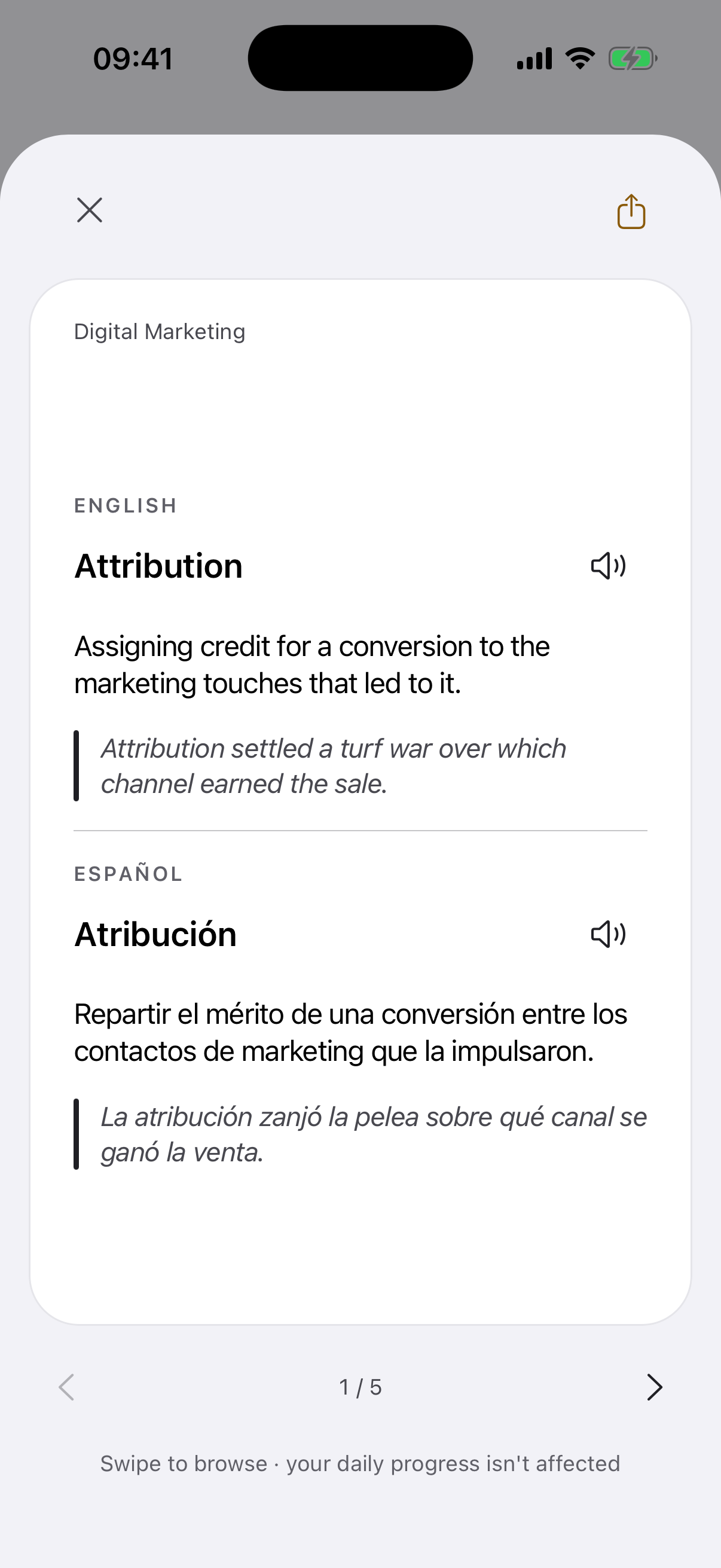
AttributionAtribución
Assigning credit for a conversion to the marketing touches that led to it.
Attribution settled a turf war over which channel earned the sale.
Here the conversation moves from "how much" to "whose credit".
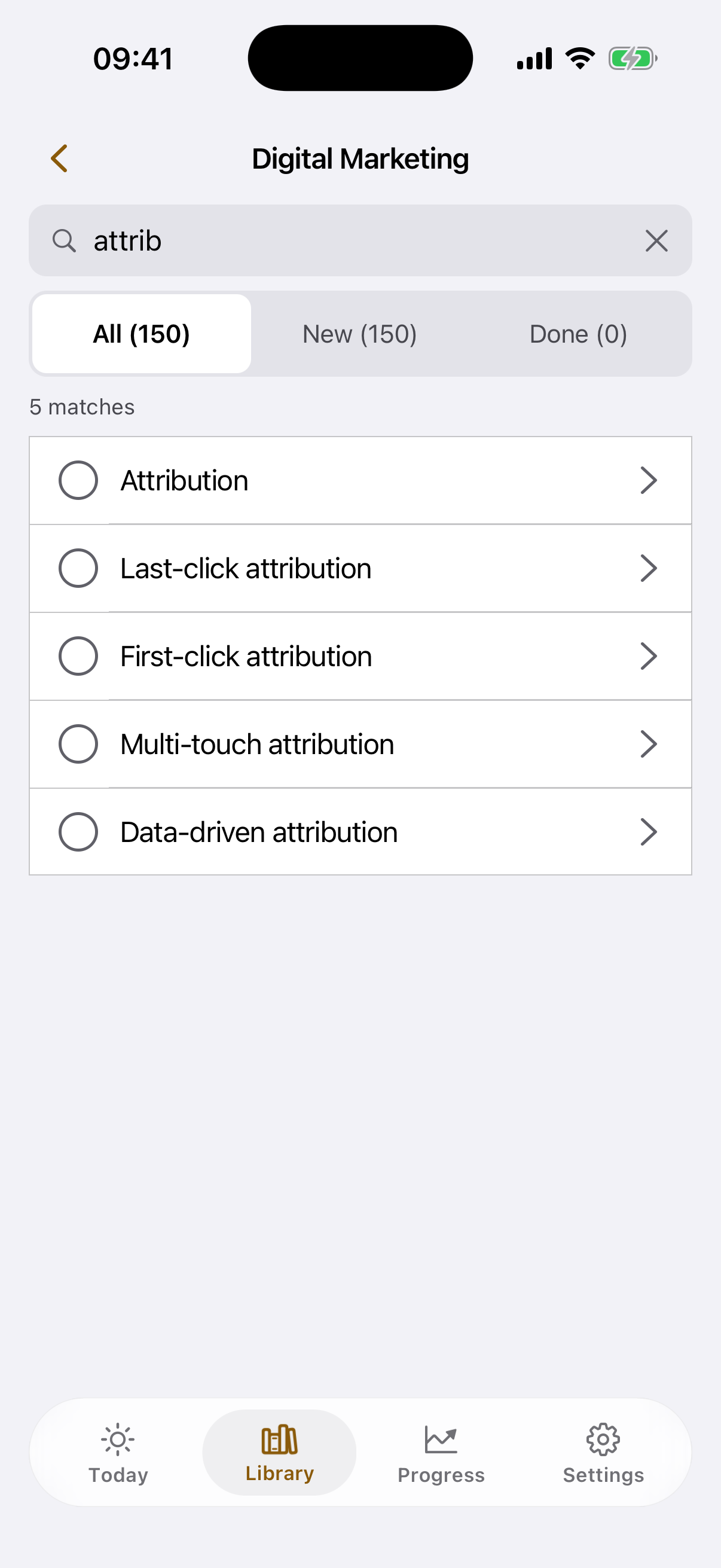
Last-click attributionAtribución al último clic
Giving all credit for a conversion to the final touch before it.
Under last-click, brand search grabbed credit the ads had earned.
The commonest way to count and the most contested. It is what gets cited when CPA doesn’t add up.
UTM parametersParámetros UTM
Tags added to a link so analytics can see which campaign sent the visit.
A typo in the UTM parameters split one campaign across three rows.
The most down-to-earth reason a report disagrees with itself. The argument gets stuck here and never reaches attribution.

Next month, the same report comes back
Same rows, and they will be read out again with no glossary attached. The one arguing about them will be you.
Questions and answers
What about the rest of the marketing words?
On the deck page, all of them. These eleven are the ones that sit in a single report.
Why is there Spanish on the card?
The abbreviations keep their letters in Spanish — CTR, CPC, ROAS — but the words behind them don’t, and attribution turns into "atribución". Both forms sit on one card, so the other half of the call isn’t a guess.
Where do the definitions come from?
From the Digital Marketing deck — the same cards as in the app.
Next month’s report will have a different eleven.
The Digital Marketing deck holds the rest — in the app they come a few a day.